
Rooted in Hope: How Plant Health Shapes Our Future
International Day of Plant Health: Protecting Plants, Protecting Life
As you tend your vegetable garden, choose your vegetables and fruits, or prepare your meal, take some time to consider where your food comes from and what you can do to protect biodiversity to feed yourself, your family, and your community.
Healthy Plants, Healthy Planet
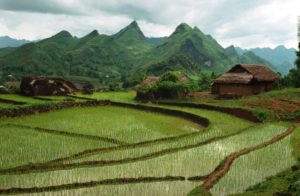
Terraced rice paddies in Viet Nam (Image: Tran Thi Hoa/World Bank via Flickr. CC BY-NC-ND 2.0 license)
Today, May 12, marks the International Day of Plant Health, an important reminder that healthy plants are essential for life on Earth. Plants make up 80% of the food we eat and produce 98% of the oxygen we breathe. Protecting plant health can help end hunger, reduce poverty, protect biodiversity, preserve the environment, and boost economic development.
One of the greatest threats to plant health comes from pests and diseases. They destroy up to 40% of global food crops each year and cause billions of dollars in losses to agricultural trade worldwide.
The 2025 study Crop pest responses to global changes in climate and land management, published in Nature, points to how climate change is having an astonishing impact on pests and thus on plant health:
- Warmer temperatures push tropical and temperate pests to move to higher latitudes and elevations and extend the pest damage season.
- Migratory pests adapt well to global change owing to their high stress tolerances and their migratory behavior. This allows them to track suitable host plants and favorable climate conditions.
- Agricultural practices, including irrigation and fertilization, can improve crop growth and reduce climate stress on plants. But they may also create favorable conditions for some pests. In intensively managed systems, these practices can reduce natural biological control by lowering biodiversity.
- Land-use changes, such as deforestation and cropland expansion, proliferate pests by modifying local climates.
Desert locust (Image: christels via Pixabay)
Take the Desert Locust: a swarm of about 40 million covering 1 km2 can eat as much food in a single day as around 35,000 people.
Unfortunately, our growing population means a growing need for more plants. The Food and Agriculture Organization (FAO) of the United Nations estimates that agricultural production must rise by about 60% by 2050 to feed a larger and generally richer population.
The solutions
The main solution experts are advocating is to increase biodiversity at both the landscape and ecosystem levels. They also recommend developing conservation strategies for biological pest control. The BioProtection Portal proposes:
- Managing habitats by planting diverse crops together to attract beneficial insects, and installing hedgerows for habitat.
- Releasing predatory organisms to help maintain pest populations while preserving local biodiversity and reducing reliance on pesticides.
- Applying biopesticides – naturally occurring organisms and substances, such as bacteria, fungi, viruses, and plant extracts. These typically break down quickly and are generally considered safer for beneficial insects and humans.
“Pollinators, such as bees and butterflies, are essential for many crops, but they are also among the most affected by chemical pesticides. Biocontrol and biopesticide products often have the advantage of being more specific to one or a few specific pests and therefore are less likely to harm pollinators directly. In addition, providing shelters and food, through hedgerows, for example, can allow pollinators to thrive alongside agricultural fields,” says Fanny Deiss in her article on Biocontrol: Protecting your crops and biodiversity naturally on the BioProtection Portal.
The solutions are applicable at both large and small scales. This means everyone, from gardners to major agricultural companies, can take this information to heart.