
Nature’s Riches: 5 Reasons to Care About Biodiversity
Today is the perfect day to celebrate biodiversity: it’s the International Day for Biological Diversity! But why should biodiversity matter to you? Here are five big reasons (according to our friends at Conservation International):
- The ecosystems we all rely on cannot survive and thrive without wildlife.
- Humans cannot stay healthy without intact biodiverse systems.
- It is an essential part of combatting climate change by mitigating carbon emissions.
- The economy flourishes because of it (this sounds counterintuitive, but it isn’t).
- For many peoples, it is an integral part of their culture and identity, and their culture and identity are fundamental to biodiversity, creating a virtuous circle.
But again, why does all of this matter? Sure, the first three points more or less make sense, but why points 4 and 5? If you dig deeper, you begin to see the links, and their importance.
Wildlife
Wildlife is essential to the healthy ecosystems we rely on, such as freshwater, pollination, soil fertility and stability, food and medicine. Ecosystems weakened by the loss of biodiversity are less likely to deliver those services. Here’s a case in point: Conservation International has focused some of its work on Take Topón in southern Mexico, which used crocodiles to increase the estuary’s biodiversity.
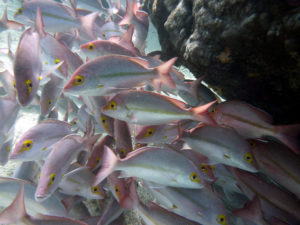
School of fish, Great Barrier Reef © 2026 Danielle Carpenter
The movements of the reptiles, which are native to the area, stir up sediment at the bottom of the estuary. This aerates the water and boosts oxygen levels, while keeping minerals and nutrients from settling and clogging the system. When the community learned that hunting the crocodiles was harming their very way of life, they embraced their former foe. As a result, the estuary’s biodiversity began to rebound — and the shrimp catch has increased tenfold since the project began.”
Human Health
Then there is the link between human health and ecosystems, between disease outbreaks and the degradation of nature. The majority of emerging viral diseases these days spread from animals to humans.
Global trends like biodiversity loss, climate change, pollution and the rise in invasive species are putting humans, plants and animals at higher risk of contracting infectious diseases. When animals are driven from their habitats, and humans encroach deeper into undisturbed forests, the chances of a pathogen ‘spilling over’ from wildlife to humans increases.”
This can be hard to grasp without numbers: “Just 10 percent of the world’s tropical forests hold more than half the global risk for zoonotic disease emergence.” So when we move into these forests, destroying essential habitats along the way, animals leave them. This growing contact between animals and humans increases the chances of disease migration.
Climate Change
Climate change mitigation is also about health, that of the plants and animals on the planet, as well as that of humans. Conserving biodiversity and restoring ecosystems helps stabilize the climate, while climate action supports ecosystem health.
Nature-based solutions, including conservation, restoration, and ecosystem management, can deliver up to 37% of cost-effective CO2 mitigation by 2030. Critical ecosystems like mangroves and peatlands offer major carbon storage and disaster protection services.”
Dragonfly © 2026 Danielle Carpenter
And services like water pollination ensure that ecosystems flourish, which in turn helps remove CO2 from the air. For instance, mangroves are particularly good at storing carbon and keeping it out of the atmosphere. Forests and wetlands act as crucial buffers against extreme storms and flooding related to climate change. But without pollination, they would not exist. This is the “why” behind biodiversity and climate change: they function best and are most resilient to climate change when their biodiversity is intact.
The Economy
In terms of the economy, over half of global GDP depends on nature. Biodiversity loss causes economic and human health risks. Approximately 75% of the world’s food crops depend on animals and insects like bees for pollination, but many of these pollinator populations are in decline, which could put more than $235 billion in agricultural products at risk. Current funding to combat this loss is less than 1% of global GDP. But these investments could be an economic windfall. The Economics of Ecosystems and Biodiversity initiative estimates that global sustainable business opportunities from investing in natural resources could be worth US$ 2–6 trillion by 2050.
Culture and Identity
And lastly, the effects of culture and identity on biodiversity are evident worldwide, not least in Indigenous Peoples and local communities (IPLCs). These communities tend to manage high-carbon and biodiverse lands, making them key stakeholders in nature stewardship. Yet, IPLCs around the world continue to struggle to preserve their unique cultures and customs, which are inherently biodiversity friendly. If they weren’t, the cultures and customs could not survive.
A case in point: IPLCs have a long history of living within and safeguarding forest ecosystems. Their culture and their identity depend on how they live and their stewardship of their home. IPLC lands have consistently better-preserved biodiversity, water, and other natural resources. And although they struggle with others trying to take their lands and undermine their human rights, IPLCs remain the true custodians of forest ecosystems. They hold or claim as traditional territories equivalent to almost 50% of the land area in 42 countries, representing 80% of global biodiversity. Almost a quarter of the carbon stored in the world’s subtropical and tropical forests is in collectively managed territories with great potential for mitigation. Involving IPLCs in managing these ecosystems is therefore vital.
What it all boils down to is health and well-being: for the planet and for everyone and everything living on it. These are the best reasons to take action on this International Day for Biological Diversity, today and every day.