
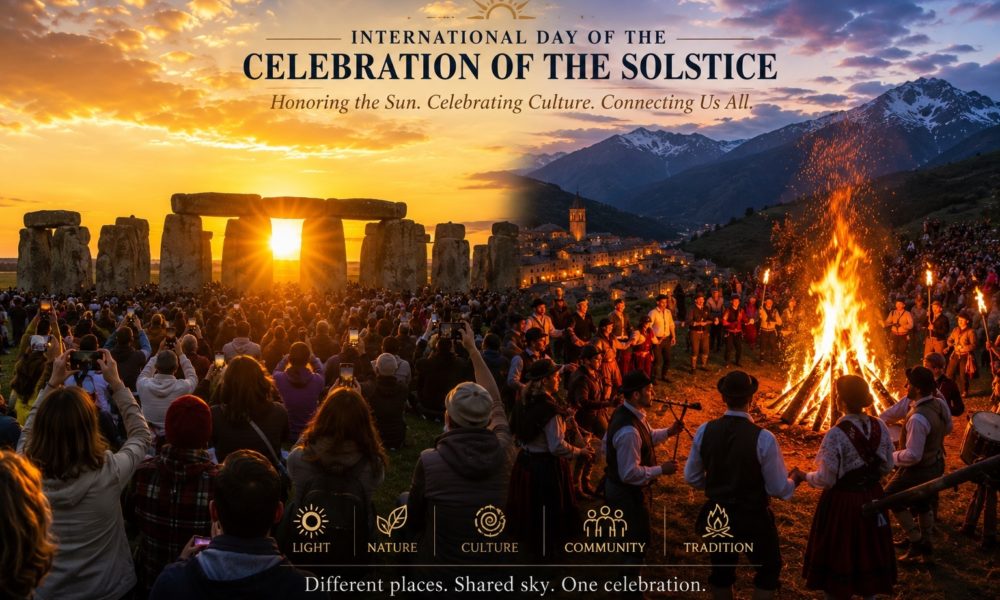
Chasing the Sun: Celebrating the International Day of the Solstice
A global celebration of light, culture, community, and our shared connection to the natural world
Every year on June 21, people around the world celebrate a special moment in Earth’s journey around the Sun: the solstice. Since 2019, the United Nations has officially recognized this occasion as the International Day of the Celebration of the Solstice, highlighting the role that solstice traditions play in bringing communities together and preserving cultural heritage.
For people in the Northern Hemisphere, June 21 is usually the summer solstice, the longest day and shortest night of the year. In the Southern Hemisphere, it marks the winter solstice, the shortest day and longest night. As the UN explains, the word “solstice” comes from the Latin words sol (sun) and sistere (to stand still), reflecting the way the Sun appears to pause before changing direction in the sky.
Why the United Nations Marks the Day
The UN established the observance because solstices and equinoxes, the two days each year when day and night are nearly equal in length, have deep significance across cultures, civilizations, and generations. According to UN General Assembly Resolution A/RES/73/300 recognizing the day, these seasonal events symbolize the fertility of the land, agricultural traditions, cultural heritage, and centuries-old customs that continue to shape communities today.
The UN notes that celebrating the solstice can help strengthen ties among peoples through mutual respect, peace, and good-neighborliness. In a world of many cultures and traditions, the solstice serves as a reminder that humanity shares the same sky, the same planet, and many of the same hopes for prosperity and harmony.
Bonfires in the Pyrenees
One of the most spectacular solstice celebrations takes place in the Pyrenees mountains, which stretch across parts of France, Spain, and Andorra. The region’s famous summer solstice fire festivals are recognized by UNESCO as part of the world’s Intangible Cultural Heritage.
As darkness falls, residents carry flaming torches down mountainsides to light large communal bonfires. The celebrations feature music, folklore, food, and gatherings that strengthen community bonds. In some villages, the event also marks important life transitions for young people. The traditions have been passed down through generations, helping communities maintain a strong sense of identity and belonging.
Dawn at Stonehenge
Thousands of people also gather each year at the ancient stone circle of Stonehenge in England to watch the sunrise on the summer solstice. The monument’s alignment with the Sun makes it one of the world’s most famous places to experience the event.
Visitors arrive before dawn to witness the first rays of sunlight shine through the prehistoric stones, creating a powerful connection between astronomy, history, and human curiosity. For many, it is a joyful celebration of nature’s rhythms and the changing seasons.
A Shared Moment for Humanity
The International Day of the Celebration of the Solstice is more than an astronomical observance. It is a celebration of humanity’s enduring relationship with nature and the traditions that connect generations.
Whether through mountain-top bonfires, sunrise gatherings, community festivals, music, dance, or quiet moments outdoors, people everywhere find their own ways to mark the turning of the seasons.
On June 21, the world pauses, if only for a moment, to appreciate the sunlight, the stories, and the shared cultural heritage that unite us across borders. And in that sense, the solstice truly belongs to everyone.