
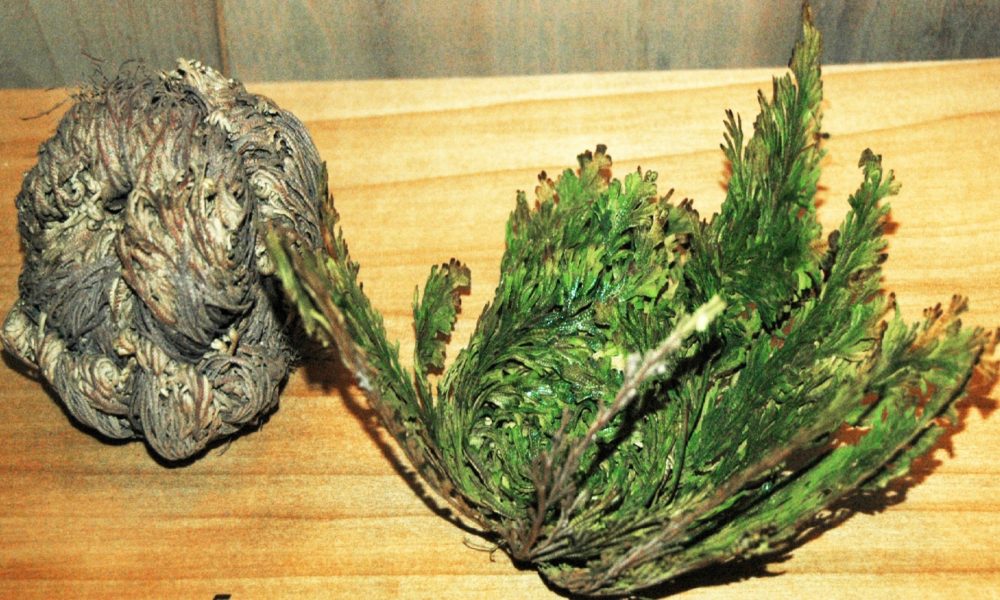
Resurrection Plants: Nature’s Blueprint for Climate-Resilient Farming
Drought-defying plants could transform agriculture and food security in a changing climate.
As the world faces intensifying climate challenges, from prolonged droughts to erratic rainfall patterns, scientists and policymakers are increasingly turning to nature-based solutions. Among the most fascinating of these are resurrection plants, a group of flora that can survive extreme dehydration and come back to life when rehydrated. Their extraordinary abilities are not only awe-inspiring but also potentially transformative for agriculture and food security in a warming world.
What Are Resurrection Plants?
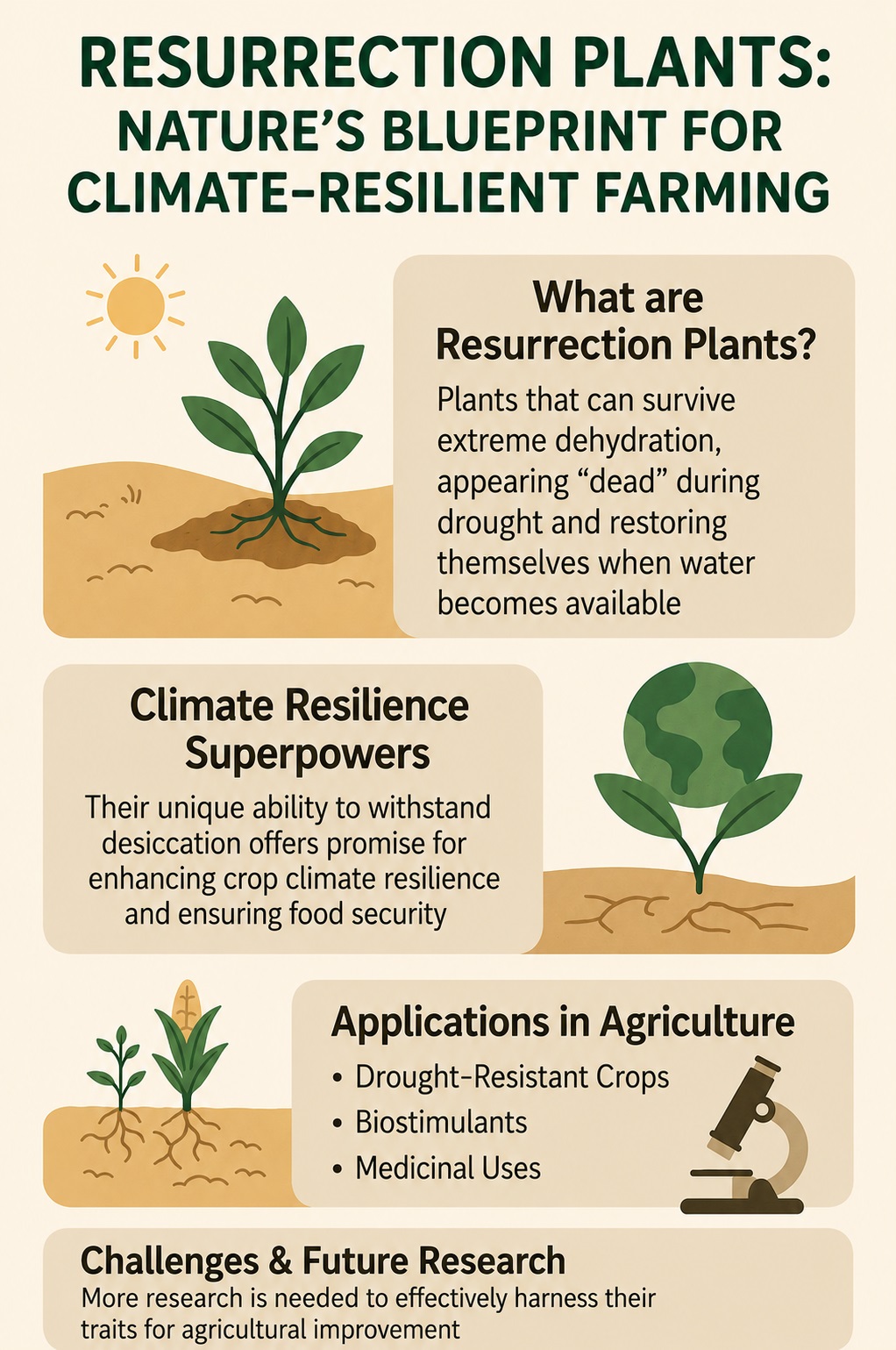
Resurrection plants, such as Selaginella lepidophylla, Xerophyta viscosa, and Haberlea rhodopensis, are a unique group of angiosperms and non-flowering plants capable of surviving near-total desiccation – losing up to 95% of their cellular water – and later recovering full metabolic function. When faced with drought, these plants essentially “shut down” their biological activity and enter a dormant state. Once water becomes available again, they “resurrect,” rapidly returning to life.
This desiccation tolerance, also known as anhydrobiosis, involves a highly sophisticated suite of physiological and molecular mechanisms. These include producing protective sugars such as trehalose, accumulating antioxidants, stabilizing cell membranes, and making higher levels of late embryogenesis abundant (LEA) proteins that shield cells from dehydration damage. These strategies enable the plants to maintain structural integrity and prevent irreversible cellular damage during periods of extreme water stress.
Relevance for Nature-Based Solutions
Resurrection plants offer a powerful model for climate resilience and nature-based solutions. Their ability to withstand extreme environmental stress without relying on irrigation or external inputs makes them a blueprint for developing drought-resistant crops. In regions where water scarcity threatens food production, leveraging the natural capabilities of resurrection plants could dramatically reduce agricultural vulnerability.
What’s more, these plants represent a low-cost, sustainable solution aligned with ecosystem-based adaptation strategies. By studying their stress responses and survival strategies, scientists can better understand how ecosystems naturally manage water stress. They can then apply the key insights to ecological restoration and land management practices to enhance drought tolerance in sensitive crop species.
Transformative Potential for Agriculture
The most groundbreaking potential of resurrection plants lies in the possibility of transferring their desiccation-tolerant traits into major food crops. If key genes responsible for their resilience can be identified and introduced into staple crops such as wheat, maize, or rice, it could revolutionize agriculture in drought-prone regions.
Initial efforts in this direction are promising. For instance, experimental studies have shown that introducing genes encoding LEA proteins and antioxidant-related stress-protective mechanisms from resurrection plants into model species such as Arabidopsis can increase tolerance. This includes improved resistance to drought and other non-living environmental stresses such as heat and salt. This conclusion is based on a synthesis of a well-established body of plant stress-tolerance research. Advances in genetic engineering, synthetic biology, and CRISPR technology may soon make it feasible to bioengineer crops with enhanced resilience inspired by these plants.
Microbiomes and Biostimulants
Another emerging area of interest is the rhizosphere microbiome of resurrection plants. This refers to the community of microorganisms living in the soil surrounding their roots. The plants not only tolerate extreme stress themselves but also host microbial communities that are uniquely adapted to harsh environments. Based on current experimental and applied microbiome research, scientists propose that these stress-tolerant microbes could be developed into biostimulants. These natural formulations may improve plant growth, enhance nutrient uptake, and increase stress resilience in crops.
Moreover, resurrection plants exhibit stress signaling mechanisms, such as the production of specific metabolites, which are small molecules involved in cellular processes. These metabolites could serve as bioindicators for drought stress in other plant species. Incorporating these indicators into farm management systems may improve drought forecasting and resource planning. This could help farmers optimize irrigation and reduce water use.
Benefits for Human Well-Being
Beyond agriculture, resurrection plants have direct benefits for human health and well-being. Many species produce bioactive compounds with antioxidant, anti-inflammatory, and antimicrobial properties. For example, Myrothamnus flabellifolia, used in traditional African medicine, contains antioxidant-rich compounds that have attracted interest for potential skin-protective and wound-healing applications. These plants are being explored for use in cosmetics, pharmaceuticals, and functional foods.
Additionally, by contributing to biodiversity conservation and ecosystem services, resurrection plants support broader ecological health. This in turn underpins human resilience to climate shocks.
Challenges and Limitations
Despite their promise, several challenges must be addressed before resurrection plants can be fully harnessed for agriculture. First, the genetic complexity of desiccation tolerance, often involving hundreds of genes working in coordination, makes it difficult to replicate the trait in conventional crops.
Second, regulatory and ethical concerns surrounding genetic modification must be carefully managed, especially when transferring traits across species. Furthermore, while resurrection plants are adapted to survive in harsh environments, they are not necessarily high-yielding or nutritionally rich. This means direct domestication may not be viable without significant enhancement.
Third, commercial-scale production of biostimulants derived from these plants’ microbiomes is still in early stages, requiring rigorous testing and standardization.
Conclusion
Resurrection plants exemplify nature’s ingenuity in surviving the harshest conditions. As climate change continues to disrupt global food systems, these remarkable organisms could play a pivotal role in shaping the future of resilient agriculture. From gene-editing opportunities and microbiome-based biostimulants to ecosystem restoration and medicinal applications, resurrection plants offer a treasure trove of solutions rooted in nature.
Realizing their full potential, however, will require interdisciplinary collaboration, from molecular biology and agronomy to policy and ethics. With careful stewardship, resurrection plants could help secure not just crops but communities and ecosystems against the growing threat of climate instability.