
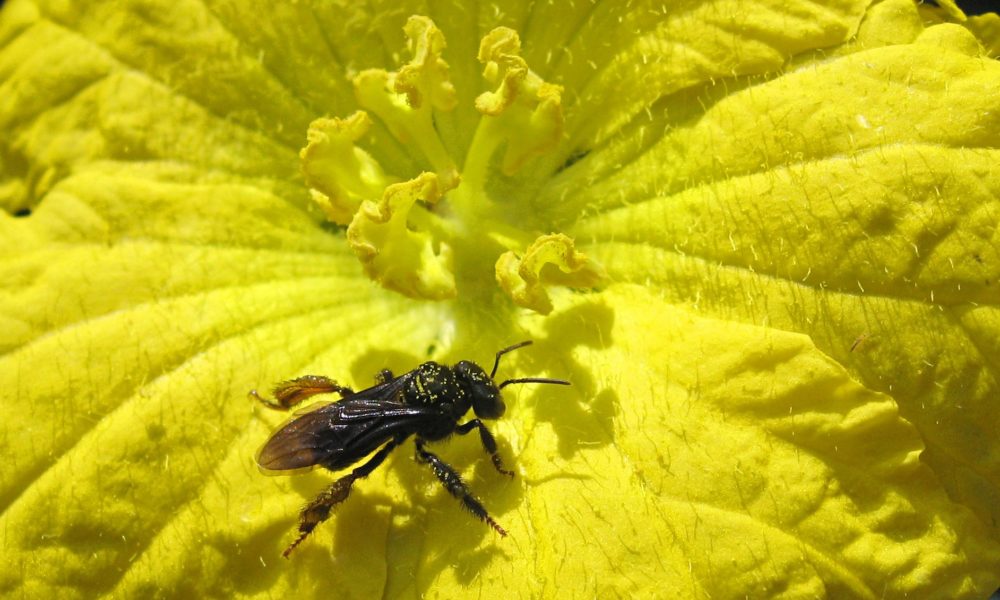
The Bees That Got a Right to Bee
In a world first, Peru gives its native stingless bees legal rights. It’s a stronger voice for the forests they help sustain.
Bees have long been recognized for what they do for us. In parts of Peru, the law is now recognizing something different: what we owe them.
In 2025, the municipalities of Satipo, in Peru’s central Amazon, and Nauta, in the Loreto region, adopted measures recognizing native Meliponini, a group of tropical stingless bees, as subjects of legal rights. The move is considered the first time an insect has been granted legal rights anywhere in the world, according to the journal Nature.
The rights include the right to exist and thrive, maintain healthy populations, live in a healthy and pollution-free environment, preserve and regenerate their habitat, and experience ecologically stable climatic conditions. Crucially, the bees can also be legally represented if they are threatened or harmed.
In Satipo, the protection applies within the Avireri-Vraem Biosphere Reserve, an enormous area of Amazonian and Andean ecosystems. The municipality formally adopted its ordinance on October 27, 2025.
From Indigenous Knowledge to Law
The idea did not appear out of nowhere.
The initiative grew from collaboration among Asháninka communities in Satipo, Kukama communities in Nauta, scientists, environmental organizations, and legal experts. Workshops and field research helped bring together Indigenous knowledge about the bees with scientific evidence about their ecological importance.
There was also an important national step. In January 2025, Peru’s Law 32235 amended existing legislation to recognize native stingless bees, alongside the honeybee, as important national resources. And it promotes the conservation, research, and reforestation of their host trees and sustainable use.
The local rights declarations took this a step further. Rather than protecting bees only because they are useful to people, they recognize their intrinsic value as living beings and as part of functioning ecosystems.
Small Bees, A Big Ecological Role
That distinction matters because Meliponini bees are much more than honey producers.
Stingless bees are major pollinators of tropical forests. A report published in the Journal of Apicultural Research highlights the remarkable diversity of Meliponini and their important role in pollinating tropical forests.
In the Amazon, their importance extends to agriculture as well as wild plants. A 2026 study found that 77 species of stingless bees in the Brazilian Legal Amazon were recorded visiting 756 plant species, including numerous plants with agricultural and economic value. This underlines the bees’ contribution to both natural and agricultural ecosystems.
Their survival is nevertheless under pressure from deforestation, habitat loss, pesticides, and climate change. Research in Peru has also shown how closely these bees depend on particular trees for nesting. It found strong associations between two stingless-bee species and specific host trees. This demonstrates the potential threat that the loss of nesting trees poses to bee populations.
Could the Idea Spread?
Giving bees legal rights does not magically stop a forest from being cleared or pesticides from being used. Its significance is that it creates a new legal tool for protecting ecosystems before damage becomes irreversible.
If similar approaches were adopted elsewhere, communities could potentially seek legal remedies when the destruction of pollinator habitats threatens the bees themselves. And when bees are threatened, so too are the plants, forests, and food systems that depend on them.
Peru’s experiment therefore points toward a broader idea. Perhaps protecting nature becomes stronger when the law recognizes not only its value to humans but also the right of living systems to continue flourishing.
For a creature as small as a stingless bee, that is a remarkably big step.