
Singapore: Bringing Nature Back into the City
Singapore shows how cities can make room for nature and create healthier places for people and wildlife.
What if the answer to some of the challenges facing modern cities was to bring more nature into them?
Singapore is putting this idea into practice. Through its ambitious City in Nature vision, the island nation is rethinking how urban spaces are designed. Its goal is to make greenery, biodiversity, and natural environments an integral part of everyday life.
Part of the Singapore Green Plan 2030, the initiative builds on decades of urban greening. Rather than treating parks and gardens as separate recreational spaces, Singapore wants to weave nature into the city itself, from buildings and roads to public spaces and infrastructure.
The strategy includes planting trees, creating green corridors that allow wildlife to move between habitats, and restoring forests and coastal ecosystems. In addition, it involves incorporating greenery into buildings. By 2030, the country aims to plant 1 million additional trees, develop 500 kilometers (310 miles) of park connectors, and bring nature within a 10-minute walk of every household.
This approach is closely linked to biophilic design: the practice of incorporating natural elements into the built environment. These can include living walls, rooftop gardens, trees, natural light, water features, and views of green spaces. The idea is simple. People benefit from a closer connection with nature, even when they live and work in densely built-up urban areas.
Nature Meets Architecture: Jewel Changi Airport
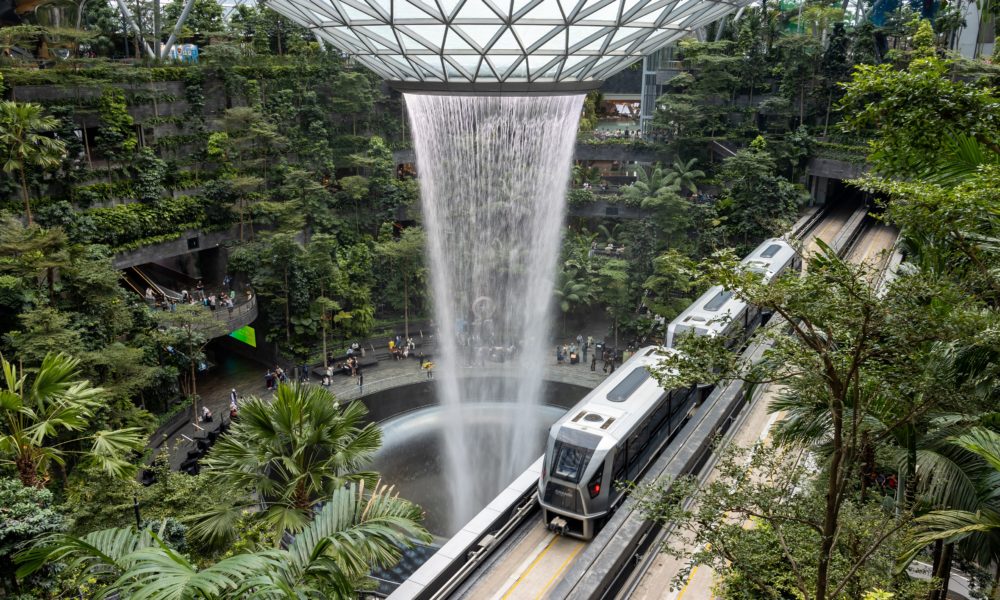
One of the most spectacular examples of biophilic design is Jewel Changi Airport. Far more than a conventional airport shopping and entertainment complex, Jewel brings a tropical landscape into the heart of a major transport hub.
Its four-story Forest Valley features more than 900 trees and palms and approximately 60,000 shrubs, with walking trails winding through the lush vegetation. At its center, the 40-meter-high (±131-foot-high) Rain Vortex cascades through the building’s glass roof, creating the world’s tallest indoor waterfall. Natural light, greenery, and moving water combine to create an environment that feels remarkably different from the usual airport experience.
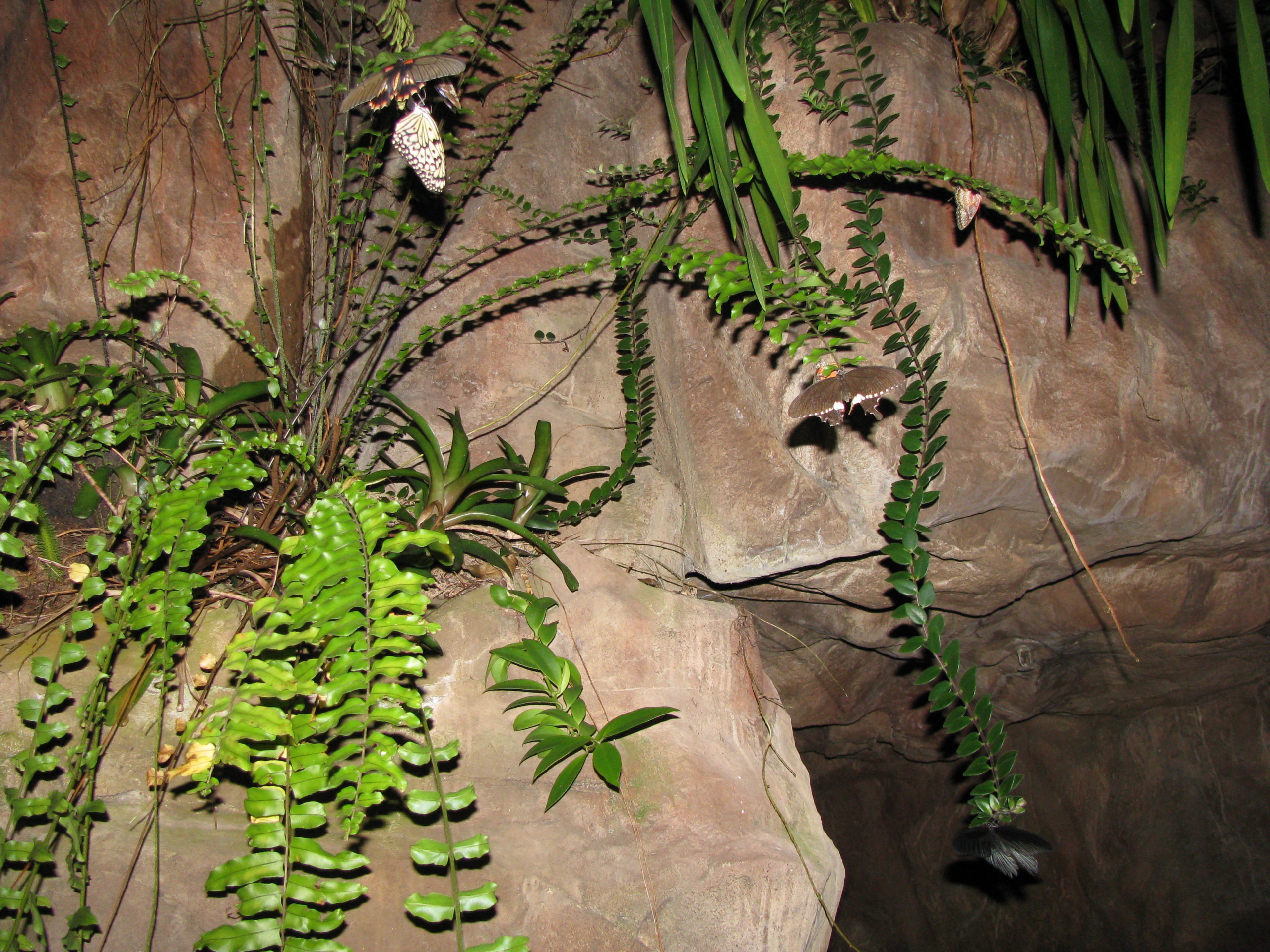
Butterfly garden at Jewel Changi Airport, terminal 3 (photo: shankar s., CC BY 2.0 license, via Flickr)
The project illustrates how architecture can do more than accommodate nature. It can make nature an integral part of the experience of a building.
Nature Meets Concrete: Khoo Teck Puat Hospital
Perhaps an even more meaningful example is Khoo Teck Puat Hospital (KTPH), a public hospital in northern Singapore that opened in 2010.
Rather than surrounding patients with the conventional clinical environment of concrete corridors and enclosed spaces, its architects designed a hospital that appears to emerge from a garden. Green courtyards, landscaped terraces, rooftop gardens, water features, and open spaces connect the buildings with the surrounding landscape and neighboring Yishun Pond.
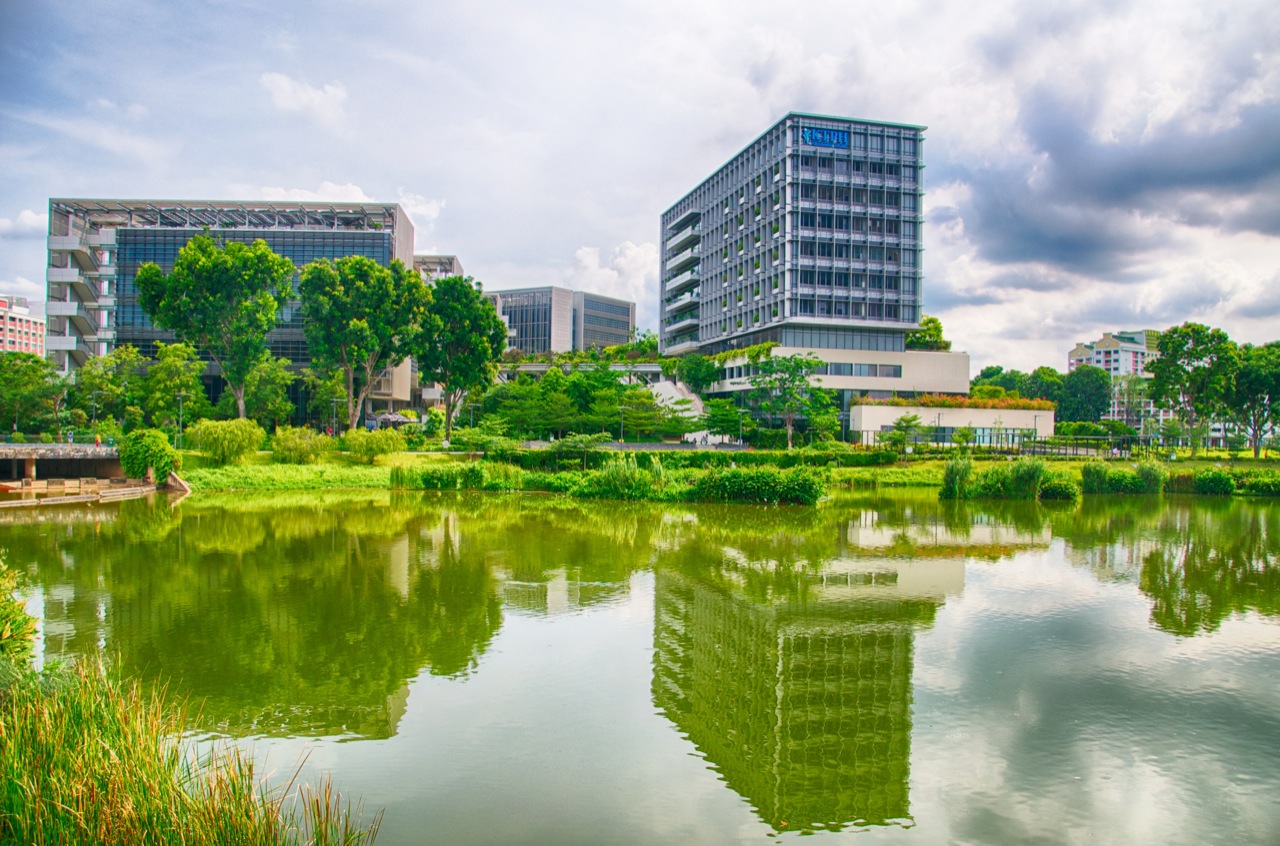
Khoo Teck Puat Hospital (photo: Eustaquio Santimano, CC BY-NC-SA 2.0 license, via Flickr)
The design also welcomes wildlife. Carefully selected plants attract birds, butterflies, and other insects, while water features introduce the soothing sounds of flowing water. A rooftop community farm and accessible gardens encourage patients, hospital staff, and local residents to spend time outdoors.
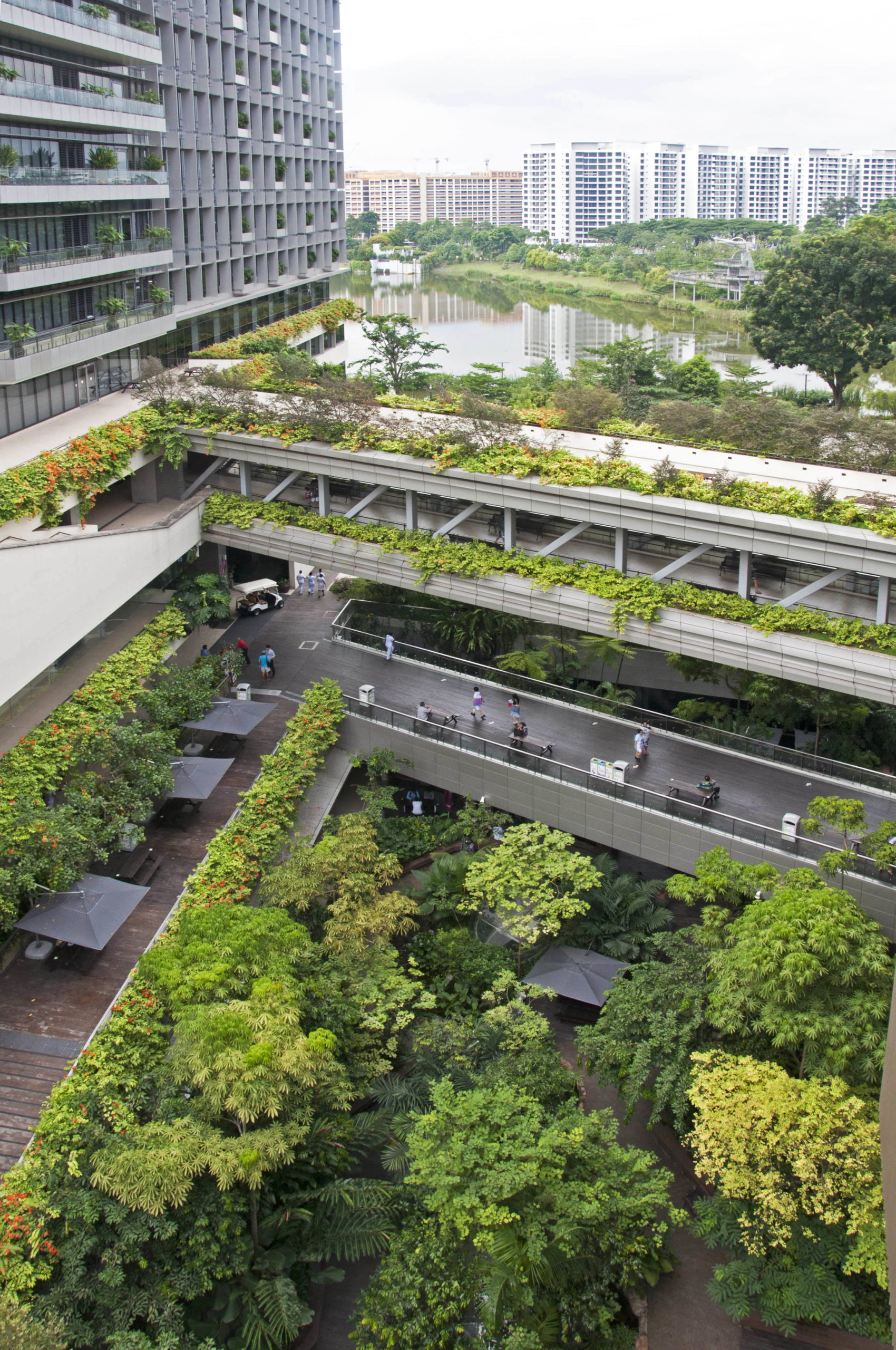
Link bridge between Towers B and C at Khoo Teck Puat Hospital (photo: KTPH, CC BY-SA 4.0 license, via Wikimedia Commons)
The hospital’s approach was evaluated in a 2016 post-occupancy study involving 200 patients, staff, and visitors. The researchers found that KTPH performed better than an older comparison hospital in perceived beauty, self-reported well-being, and people’s awareness of and proximity to nature. More than 80% of respondents also felt that hospitals should invest in greenery and water features. The study further found that the landscaped environment helped make KTPH a community gathering place. Indeed, 15% of visitors come for social or recreational reasons.
Importantly, these findings concern users’ perceptions and well-being rather than measured clinical recovery times. Nevertheless, the wider scientific evidence offers encouraging insights into the potential health benefits of nature-inspired healthcare environments.
The Science behind Bringing Nature Indoors
The benefits of biophilic design are increasingly supported by scientific research.
A 2024 systematic review of 74 peer-reviewed studies on workplace environments found that greenery, views of nature, and access to daylight were associated with meaningful improvements in psychological and physiological well-being. These features also helped reduce stress and support cognitive performance.
Research in healthcare settings points in a similar direction. A 2022 systematic review of biophilic design in clinical environments identified natural light, views, fresh air, and relaxing surroundings as important features for patients’ comfort and well-being.
Evidence also links exposure to nature with physical recovery. In a well-known 1984 study published in Science, researchers examined patients recovering from gallbladder surgery. Those whose hospital windows overlooked trees had shorter postoperative hospital stays and fewer negative comments in nurses’ notes. They also needed fewer doses of strong pain medication than patients whose windows faced a brick wall.
Although this study was not conducted at KTPH, it provides an important scientific foundation for the idea that a connection with nature can support recovery.
Cooler Cities and Healthier Ecosystems
The benefits extend beyond human well-being. In densely populated cities, concrete, asphalt, and buildings absorb and retain heat, creating what is known as the “urban heat island effect.” Trees and other vegetation provide shade and cool their surroundings through evapotranspiration, the process by which plants release water vapor into the air.
A 2022 field study in Singapore found that daytime air temperatures above vegetated surfaces were up to 1.72°C lower than above concrete surfaces. Green roofs, planted façades, and urban gardens can therefore help make built-up neighborhoods more comfortable, particularly in hot climates.
Restoring nature also helps protect biodiversity. Singapore is connecting parks and nature reserves through green corridors, known as Nature Ways. These provide routes for birds and butterflies to move between habitats. Its nature restoration efforts include restoring forests, coastal habitats, and mangroves, as well as encouraging native plants and wildlife to return to urban areas.
These measures recognize that healthy urban environments depend not only on the presence of green spaces but also on functioning ecosystems.
Singapore: An Inspiration for Other Cities?
Singapore’s City in Nature vision offers an interesting model for other densely populated cities facing rising temperatures, biodiversity loss, and growing concerns about mental well-being.
Its experience demonstrates that urban development and nature conservation do not have to compete for space. Buildings can incorporate living landscapes, hospitals can become restorative environments, and transport hubs can offer opportunities to experience nature. Green corridors can also connect isolated habitats, helping wildlife coexist with urban communities.
Of course, Singapore’s approach reflects its particular geography, climate, resources, and long-term planning framework. Other cities will need to adapt these ideas to their own environments and priorities.
But the underlying principle is widely applicable: nature should not be an afterthought in urban planning. It should be part of the way cities are designed from the beginning.
By making room for trees, water, wildlife, and green spaces, Singapore is demonstrating how cities can become not only more attractive but also healthier and more resilient places to live.
