
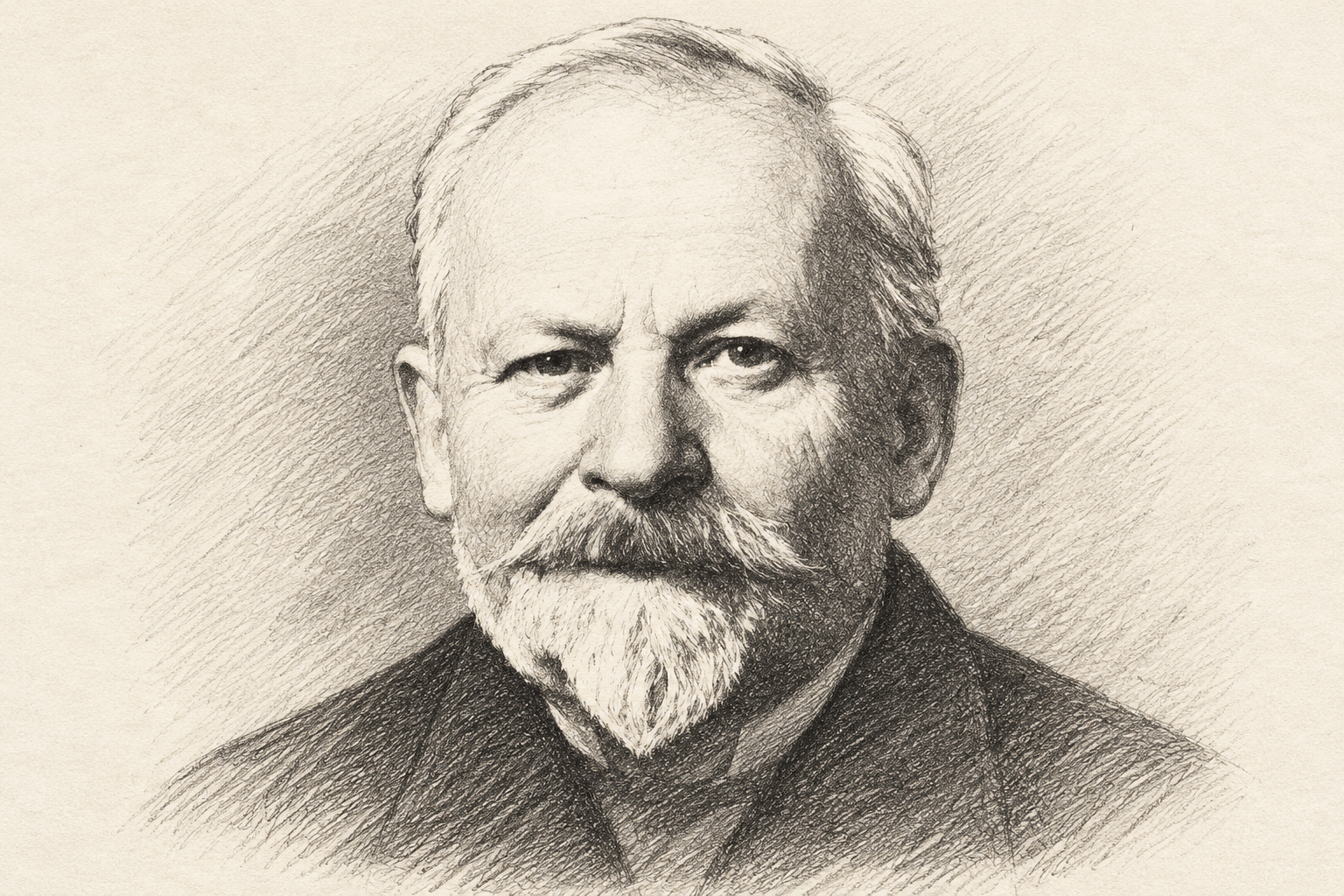
The Power of a Few Simple Words: The Frenchman Who Pioneered Positive Self-Talk
How a Pharmacist Believed Our Thoughts Could Shape Our Well-Being
Long before positive affirmations became popular, Émile Coué championed a surprisingly simple idea: gentle, repeated suggestions may help us change how we feel and behave. Today, science offers some intriguing clues about why his method may work.
A Century-Old Idea with a Modern Message
What if a few words, repeated every day, could help us face life with greater confidence and calm? More than a century ago, French pharmacist and psychotherapist Émile Coué (1857–1926) believed they could.
While working in his pharmacy in Troyes, France, Coué noticed that customers sometimes seemed to benefit more when they believed a medicine would help them. This observation sparked his interest in suggestion and the relationship between expectations and well-being.
Coué went on to develop a method called conscious autosuggestion: deliberately repeating constructive thoughts to influence our feelings, habits, and responses. His most famous phrase, a simple mantra intended for daily repetition, became a sensation:
“Every day, in every way, I am getting better and better.”
To overcome difficulties, Coué encouraged people to relax and repeat their chosen words without strain rather than rely on sheer willpower. He believed that imagination and expectation could be more influential than forceful attempts to control ourselves.
His ideas spread internationally, attracting enthusiastic followers as well as skeptics. Today, his method can sound like wishful thinking. Yet some of its underlying principles have parallels in modern psychological and neuroscience research.
What the Placebo Effect Can Teach Us
One important connection is the placebo effect: the measurable improvement some people experience because of their expectations and the context surrounding a treatment, rather than its specific active ingredient.
Researchers have found that expectations can influence how the brain processes pain. A meta-analysis of 25 brain-imaging studies found that placebo-related pain relief was associated with changes in activity in several brain regions involved in processing pain and emotion.
This doesn’t mean that believing something makes every problem disappear. Rather, it shows that what we expect can influence aspects of our physical and emotional experience.
The broader field of psychoneuroimmunology investigates how psychological processes, the nervous system, hormones, and immune function interact. Research suggests that stress and approaches that use the mind to influence physical and emotional well-being can affect some biological processes, although results vary and the mechanisms are complex.
Coué did not have today’s scientific tools, and his particular method has not been validated in its entirety by modern clinical trials. Nevertheless, his intuition that the mind and body are connected anticipated questions that researchers continue to investigate.
Why Repetition May Make a Difference
Coué’s emphasis on repetition also has a modern parallel. The brain can change through experience, a capacity known as neuroplasticity. Repeatedly practicing a skill or mental response can strengthen the processes involved in it.
Rehearsing a constructive thought may help bring it to mind more readily in everyday situations. For example, someone who regularly reminds themselves, “I can take this one step at a time,” may find it easier to approach a difficult task without becoming overwhelmed.
There is an important distinction, however, between practicing a useful thought and simply insisting that everything is wonderful. Research published in Psychological Science found that repeating implausibly positive statements could make some people with low self-esteem feel worse.
The lesson is to choose words that feel encouraging and believable. “I am learning to handle challenges” may be more helpful than “Nothing ever goes wrong.”
Why Coué Favored Relaxation over Willpower
Trying desperately to stop worrying or force ourselves to feel confident can sometimes increase the pressure we experience. Coué proposed that gentle, relaxed repetition was preferable to forceful self-control.
Modern research does not establish that a mantra literally bypasses the conscious mind’s critical filters. However, taking a quiet moment to repeat a reassuring phrase may help us focus on a more helpful perspective and practice more positive responses to everyday challenges.
Over time, this simple routine may help build confidence, strengthen emotional resilience, and make it easier to respond to difficult situations with greater calm and self-assurance. Its benefits are likely to vary depending on the individual, the wording, and the circumstances.
How to Practice the Coué Method
Émile Coué described his routine in his book, Self-Mastery Through Conscious Autosuggestion, published in English in 1922.
His daily practice is straightforward:
- Choose a quiet moment. Sit comfortably or lie in bed, ideally just after waking and before going to sleep.
- Close your eyes and relax. Let your breathing settle. There is no need to force yourself to feel a particular way.
- Repeat the phrase 20 times. Slowly or gently, say: “Every day, in every way, I am getting better and better.” Coué suggested counting with a string of 20 knots to avoid having to concentrate on the number.
- Avoid straining to believe it. Let the words become familiar rather than trying to force a particular result.
- Practice consistently. Try the routine daily for a few weeks and notice whether it affects your outlook, stress levels, or responses to challenges.
You can also choose a more specific, realistic phrase that reflects something you want to develop, such as patience, courage, or self-confidence.
A Helpful Habit, Not a Miracle Cure
Autosuggestion is not a substitute for medical care, psychotherapy, or prescribed treatment. Getting professional support is particularly important for severe depression, trauma, and other serious mental health conditions. Anyone experiencing persistent or worsening symptoms should seek appropriate help.
Nor should people blame themselves if repeating positive phrases does not improve their circumstances. Many difficulties cannot be resolved by changing our thoughts alone.
Émile Coué’s enduring contribution may be less about promising miraculous cures than reminding us that the way we speak to ourselves matters. A few quiet moments each day cannot guarantee a better life. But they can offer an opportunity to pause, practice a more constructive perspective, and meet the day with a little more hope.
