
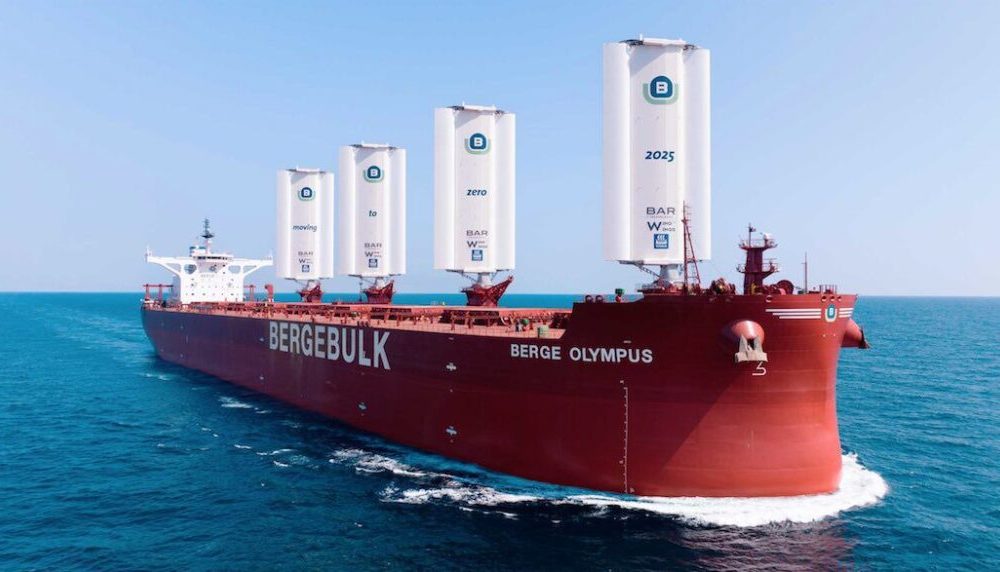
Shipping’s Return to Sails Has the Wind at Its Back
The history of sailboats stretches back to around 4000 BCE, when Egyptians used masts and sails to travel the Nile.
Over the centuries, many different types of sailing vessels crossed the world’s seas, from galley ships and Viking longboats with their single square sails, to Chinese junk ships whose bamboo-reinforced sails improved aerodynamics. Later came Spanish galleons, clipper ships and, more recently, yachts.
By the 19th century, however, commercial shipping began to turn away from wind power. Steam engines, paddle wheels, and eventually diesel offered greater efficiency, size, and speed, reshaping global trade.
Returning to Its Roots
Today, shipping accounts for a significant share of global greenhouse gas emissions, with vessels emitting large quantities of carbon dioxide, sulphur oxides, and other pollutants. Increasing regulatory pressure is now pushing the industry to cut its emissions.
Airseas engineers giant kites to pull cargo ships
Source: Airseas
The International Maritime Organization has set decarbonization targets that aim to reduce greenhouse gas emissions by at least 50% by 2050 compared with 2008 levels.
These pressures are driving shipping back to its roots: using wind power – through modern sails – as a complementary source of propulsion.
Wind-assisted Propulsion Systems
Wind-assisted propulsion systems, or WAPS, harness wind power to complement other sources of energy by generating aerodynamic forces. Because wind is an inexhaustible, free, zero-carbon energy source, the aim of these systems is to improve the efficiency of shipping operations and contribute to industry decarbonization.
WAPS innovations include rotors, kite sails, and rigid sails deployed on cargo ships to capture wind energy and help propel the ship forward.
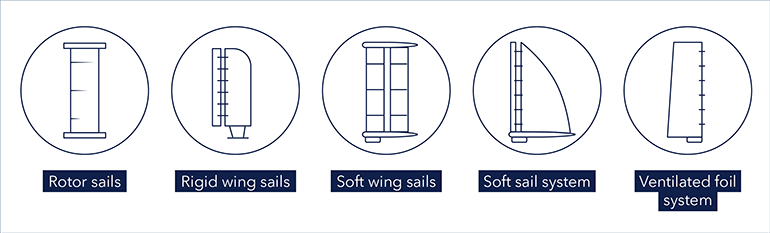
Different types of WAPS. Source: DNV
Types of WAPS
| Type | How it works | Benefits | Challenges |
| Rotor sails | Cylindrical structures that rotate to generate lift via the Magnus effect | High efficiency, low maintenance, proven in commercial shipping | Require electrical power to spin |
| Wing sails | Rigid, airfoil-shaped structures similar to airplane wings | High aerodynamic efficiency, good for various wind angles | Complex operation, often requiring tilting for ports |
| Suction sails | Use air suction to enhance lift and reduce drag | Efficient lift generation, good for stability | Require electrical power for suction |
| Soft sails | Reduce deck clutter and operate above ship obstructions | Lightweight, simple design, low cost | Require frequent adjustments and space on deck |
| Kites | Fly high above a ship capturing stronger, more consistent winds | Large, tethered sails flying at high altitudes [where wind speeds are stronger] | Limited effectiveness in crosswinds or upwind sailing |
Source: Maritime Page Wind-Assisted Propulsion Systems (WAPS): A Game Changer for Maritime Decarbonization article
“Verified data from shipowners and operators shows that WAPS can reduce fuel consumption by 5-20% annually, with some vessels exceeding 30% savings in
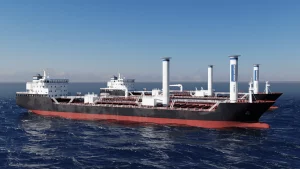
Anemoi rotor sails on a tanker
Source: Anemoi Marine Technolgies Ltd.
optimal conditions. These reductions depend on several factors, including the type of WAPS installed, the vessel’s size, its operational route, and prevailing wind conditions.
“For ships operating on wind-friendly routes, the benefits can be even greater. Weather routing, a navigation strategy that optimizes voyages based on wind patterns, can amplify fuel savings by steering ships into favorable conditions. Optimized routing can sometimes double the fuel savings compared to a direct, non-optimized path. This means that shipowners who integrate WAPS reduce operational costs and gain a strategic advantage by minimizing fuel dependency in an era of volatile prices.”
Source: Maritime Page Wind-Assisted Propulsion Systems (WAPS): A Game Changer for Maritime Decarbonization article
Beyond Decarbonization
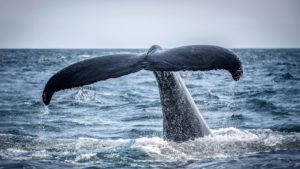
Image: Richard Sagredo
These technologies also have an impact beyond decarbonization: they are quieter, minimizing disruptions to marine ecosystems, especially those that use echolocation, such as whales and dolphins.
And if the wind is right, you can sail away
And find serenity
Oh, the canvas can do miracles”— Lyrics of “Sailing” by Christopher Cross, 1979