
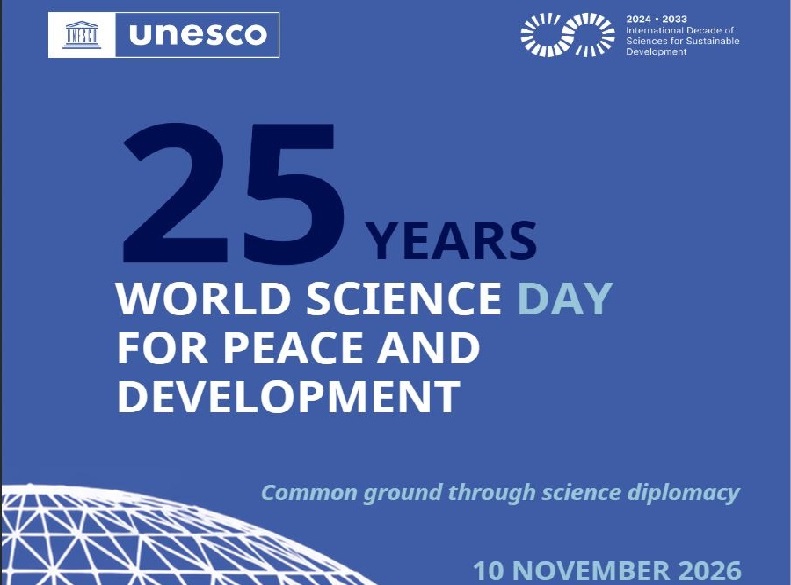
Beyond Borders: How Science Brings Us Together
Celebrating World Science Day for Peace and Development
Every November 10, World Science Day for Peace and Development celebrates the contribution of science to society and its potential to help create a more peaceful, sustainable, and prosperous world. It also reminds us that scientific progress is not just the responsibility of researchers and laboratories. Everyone has a stake in understanding, discussing, and benefiting from new discoveries.
Established by the United Nations Educational, Scientific and Cultural Organization (UNESCO) in 2001, the annual observance highlights the importance of making science accessible to all and strengthening the relationship between science and society.
A Day Rooted in International Cooperation
The origins of World Science Day go back to the 1999 World Conference on Science, held in Budapest, Hungary. Organized by UNESCO and the International Council for Science (now the International Science Council), the conference reaffirmed the importance of scientific knowledge and international cooperation in addressing global challenges.
UNESCO proclaimed November 10 as World Science Day for Peace and Development two years later, with the first worldwide celebration taking place in 2002.
The Day serves as an annual reminder of the commitments made at the Budapest conference: to use scientific knowledge responsibly for the benefit of humanity and promote international scientific collaboration. It also emphasizes the importance of ensuring that the public has a voice in discussions about science and its impact.
Why Science Matters to Everyone
Science is central to many aspects of everyday life, from the medicines we rely on and the food we eat to the technologies we use and the energy that powers our homes.
It also plays an essential role in addressing some of humanity’s greatest challenges. Scientific research helps us understand climate change, protect biodiversity, prevent and treat diseases, improve food security, and develop cleaner sources of energy.
But scientific progress alone is not enough. Its benefits must be shared fairly, and research findings need to inform public policies and decisions. Equally important is public trust. People need access to reliable scientific information to make informed choices and participate in debates that affect their lives.
World Science Day therefore aims to strengthen public awareness and encourage solidarity through shared knowledge. It also seeks to renew commitments to science for the common good and draw attention to the challenges facing scientific research.
2026: Finding Common Ground through Science Diplomacy
This year’s theme, Common Ground through Science Diplomacy, highlights another important contribution of science: its ability to bring countries and communities together.
Science diplomacy involves using scientific collaboration, knowledge, and expertise to build international relationships and encourage dialogue. It also helps nations work together to address challenges that cross national borders.
Consider climate change, infectious diseases, ocean degradation, and biodiversity loss. None can be tackled effectively by a single government acting alone. They require researchers, public authorities, and institutions to exchange information, share expertise, and coordinate their efforts.
Scientific cooperation can also keep channels of communication open when political relations become difficult. Researchers working toward a shared goal can build trust and maintain relationships between countries, creating opportunities for dialogue and understanding.
The 2026 theme encourages governments, scientists, and international organizations to recognize this potential and make greater use of science as a bridge between nations.
How the World Celebrates
World Science Day is marked around the world by universities, research institutions, schools, and scientific organizations. Museums and government agencies also organize events to commemorate the occasion.
Celebrations take many forms, depending on the organizers and local context. They can include public lectures, scientific exhibitions, workshops, panel discussions, laboratory visits, school activities, and online events. These initiatives give people opportunities to meet researchers, explore scientific discoveries, ask questions, and learn how research is improving lives.
For 2026, the International Science Council is encouraging its members and partners to organize events exploring science diplomacy. The public conversations will focus on scientific cooperation and its potential to strengthen relationships internationally.
Ultimately, World Science Day celebrates a powerful idea: knowledge becomes more valuable when it is shared. By encouraging curiosity, supporting research, and bringing people together across borders, science can help build a future that is healthier, more sustainable, and more peaceful for everyone.
