
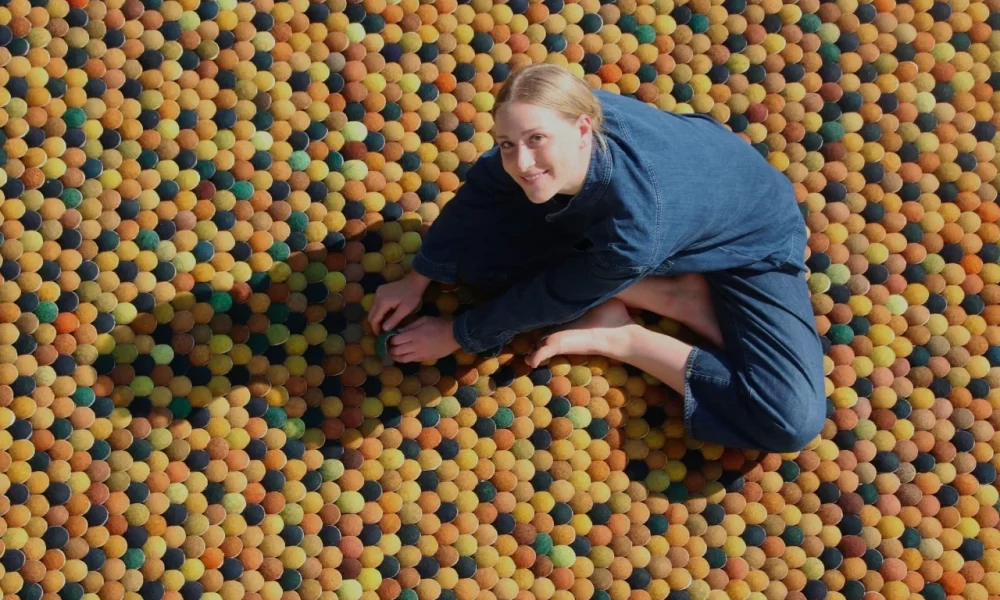
Game, Set, Reuse! Giving Tennis Balls a Second Life
What happens to a tennis ball after its final serve? Belgian artist and material researcher Mathilde Wittock has a winning answer: transform sporting waste into beautiful furniture and sound-absorbing designs.
From the Tennis Court to the Drawing Board
Millions of tennis balls are made to bounce but their useful lives on the court can be surprisingly short. What if they could continue serving a purpose long after the final point?
Designer Mathilde Wittock is turning that question into creative action. Through her Brussels-based studio, MWO Design, she explores how discarded materials can become useful, attractive, and sustainable products.
After studying biodesign and industrial design at London’s Central Saint Martins, Wittock developed a practice combining material science, sensory design, and circular thinking. Her goal is to create objects that work beautifully while making better use of the resources we already have.
Soundbounce: An Ace at Tackling Waste
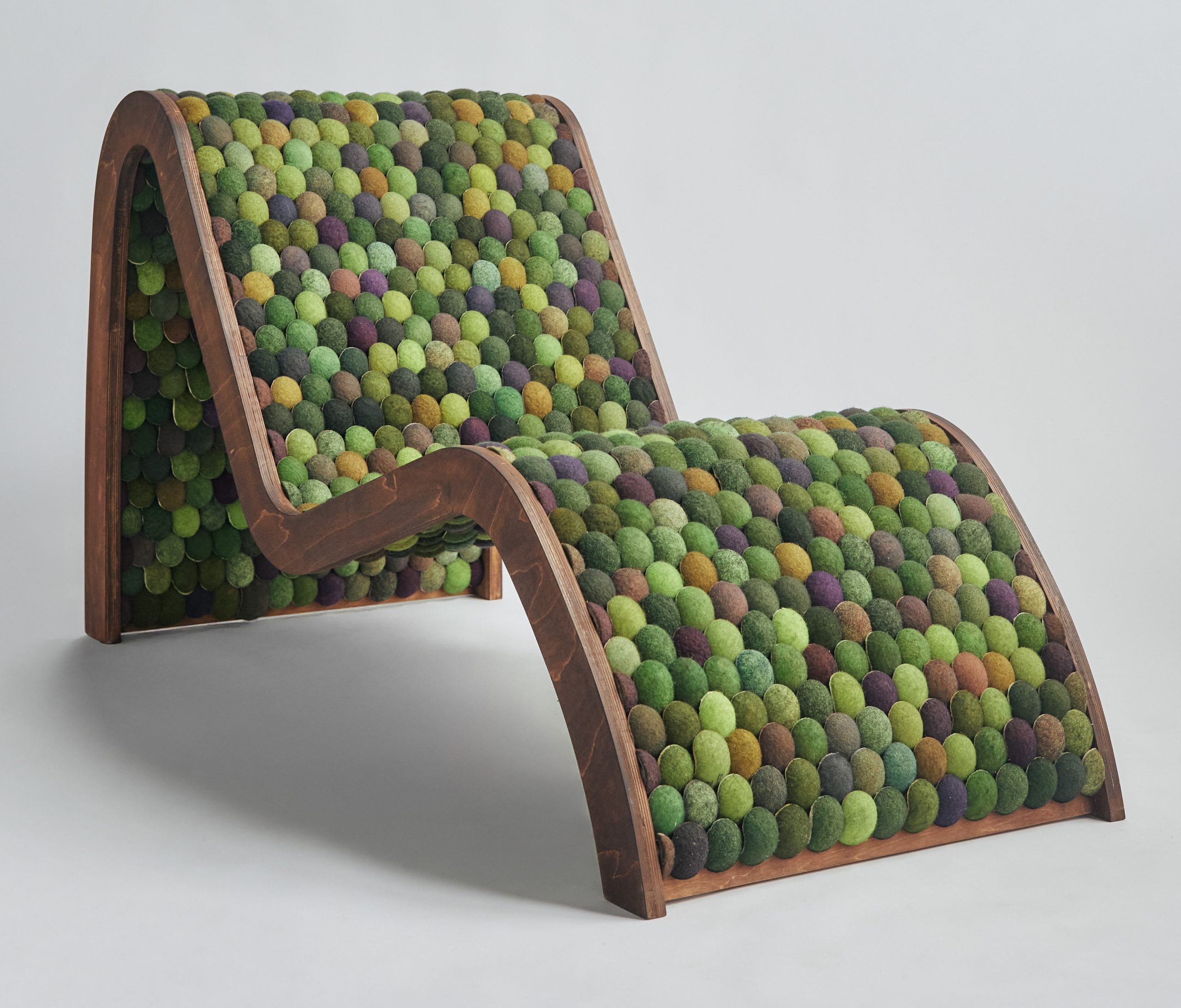
Image: Rodolphe De Brabandere, courtesy of Mathilde Wittock
Her project, Soundbounce, gives used tennis balls an unexpected new role. Instead of heading straight for disposal, they are transformed into distinctive acoustic wall panels, room dividers, benches, chairs, and other furniture.
The scale of the opportunity is striking. The Green Product Award reports that around 400 million tennis balls are produced worldwide each year, with only about 1% recycled. Soundbounce offers a practical way to recover some of this underused material and turn it into something valuable.
The numbers behind the design are impressive, too. According to the project’s published figures, one square meter of Soundbounce uses 283 tennis balls and avoids an estimated 8.5 kg (18.7 lb.) of carbon dioxide emissions. That means yesterday’s sporting equipment can help create tomorrow’s more thoughtful interiors.
And these are not simply decorative objects. The felt covering of tennis balls offers useful sound-absorbing properties, making the material suitable for spaces where reducing echoes and improving acoustic comfort matter.
Clever Design Keeps the Cycle Going
What makes Wittock’s approach particularly promising is that she thinks beyond recycling. Her designs are created with their next life in mind.
The tennis balls are fitted into a supporting structure without glue, allowing the components to be separated rather than permanently bonded together. This makes repair, disassembly, and material recovery easier at the end of a product’s life.
In an interview published by the World Intellectual Property Organization, Wittock explains how she explored the physics of sound absorption and experimented with different ways to cut, color, and assemble the balls. She also developed an approach that allows supporting structures to be produced locally from digital design files, potentially reducing the need to transport bulky finished products over long distances.
It is a thoughtful combination of creativity, technical research, and circular design: make waste useful, avoid unnecessary adhesives, and consider what happens when a product is no longer needed.
Better Spaces, One Ball at a Time
Soundbounce demonstrates how sustainability can improve everyday environments without sacrificing style. Its textured surfaces and carefully arranged colors give discarded tennis balls a striking new identity. At the same time, its acoustic applications offer practical benefits for offices, restaurants, and other shared spaces.
Wittock’s work also challenges a familiar assumption: that products made from waste must look like waste. Instead, she transforms a material associated with sports courts into contemporary design that people may actively want in their homes and workplaces.
Her approach has earned recognition, including a win for Soundbounce in the Workspace category of the Green Concept Award.
A Winning Idea Worth Spreading
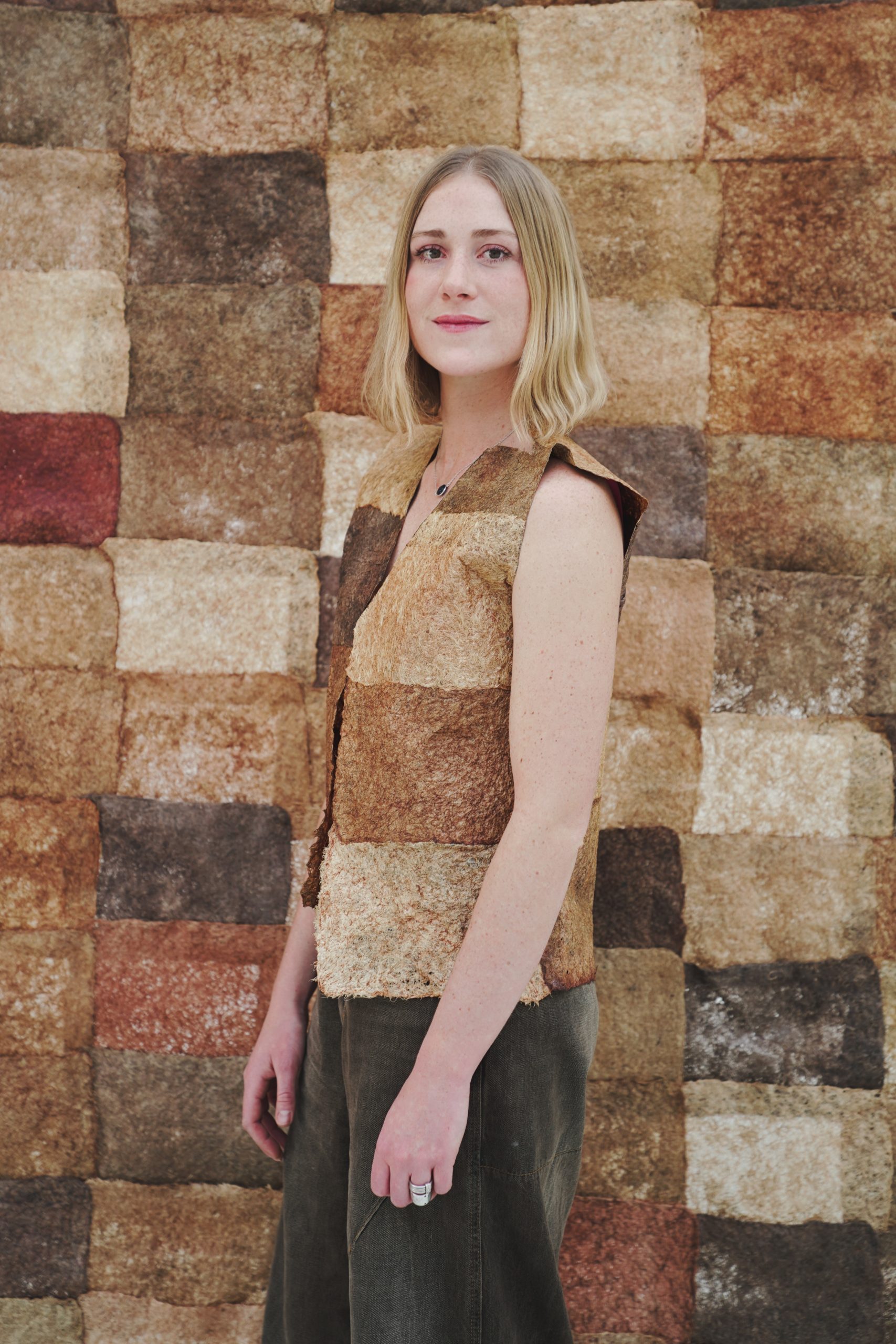
Image: Olympe Tits, courtesy of Mathilde Wittock
Mathilde Wittock’s work offers an encouraging lesson for anyone interested in a more sustainable future. Innovation does not always require inventing an entirely new material. Sometimes, it means looking differently at something we already have.
By turning discarded tennis balls into acoustic panels, partitions, and furniture, she is helping demonstrate how waste can become a resource, how design can support circularity, and how practical environmental benefits can go hand in hand with beauty.
The next time a tennis ball reaches the end of its game, its story might not be over. It could be the beginning of something altogether more lasting.