
Hypnosis: Helpful, Healing, Not Hype
Hypnosis helps you help yourself.
Have you ever arrived at your destination only to realize that you’ve no idea how you got there? You know you took your car, or hopped on your bicycle, or walked but, because you take the same route all the time, you go on “autopilot” to your destination. Or maybe you get lost in thought, immersed in music, or engrossed by an activity. It may surprise you to know that these are a type of self-hypnosis, although unintentional and with no specific conscious goal.
Hypnosis is a mind–body action that is effective for the treatment of anxiety, stress, depression, phobias, pain, weight loss, stopping smoking, sleep disorders, the side effects of cancer treatment and menopause, among many others. Dating back 3,000 years or more, hypnosis uses verbal suggestions to alter awareness, perception, and cognition.
You Become What You Think
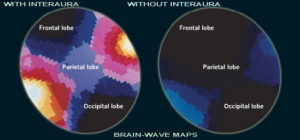
Brain on hypnosis (Source: www.interaura.net, FAL, via Wikimedia Commons)
“Sensory hypnotic experiences involving sight, sound, and touch activate the same regions of the brain specific to those senses,” says Dr. Ran Anbar, a leader in clinical hypnosis. “When you visualize a calming environment and mentally engage your senses, your brain is stimulated as if you were there.”
One big benefit is an increase in “PNS [parasympathetic nervous system] activity both during and directly after the experience. This leads to relaxation of the body, decreased anxiety, and reduced pain perception,” Anbar continues.
The Changing Brain
Beyond helping with problems, this heightened state of concentration and focused attention also affects the brain. According to the Washington DC Hypnosis Center, research conducted at Stanford University showed that during hypnosis, areas of the brain associated with emotional control and concentration alter their activity. This process enables the brain to essentially “recode” stress responses. That results in lower anxiety levels, sharper focus, and a deeper sense of calm and relaxation. “In short, hypnosis helps regulate your nervous system and lowers stress in ways that meditation alone might not reach.”
Anbar also notes that hypnosis “is associated with increased theta waves and thus may be a state different from awake and sleep states. Theta waves are a slower set of waves, with a high amplitude associated with many areas of cognition including attention, decision-making, drowsiness, emotional arousal, and storage and retrieval of memories. [H]ighly hypnotizable people show higher theta wave activity during both hypnosis and regular baseline conditions. The association of theta waves may underlie emotional changes during a hypnotic state.”
Debunking the Myths
Hypnotic spiral (Source: Lawrencedwolf, CC0, via Wikimedia Commons)
As with any alternative treatment, hypnosis comes with many myths. For instance, one belief is that hypnosis is akin to sleepwalking or a lack of awareness of one’s surroundings, with the person unable to resist suggestions. The fact is, however, that individuals remain awake and conscious of what’s happening around them, even while under hypnosis. They do not lose control and can resist suggestions that do not align with their inner inclination.
Another example is the belief that participants must be gullible or that the hypnotist has control over them. Hypnotists, and those who have been hypnotized, know that participants need just three simple things. These are 1) hypnotic suggestibility, or how likely a person is to respond to suggestions; 2) confidence that they will respond as suggested; and 3) a positive attitude towards hypnosis.
Not Magic, but Helping and Healing
Hypnosis does not involve magicians waving pocket watches in front of your eyes and casting a spell. It isn’t mind control or brainwashing. No one is trying to trick your body or brain into changing.
It is just you and your brain, helping you help yourself, and with a guide to help you along the way.